The Valley of Vision by Arthur Bennett Review
John Bunyan once said, "In prayer it is better to have a heart without words than words without a heart." J. C. Ryle said that to be prayerless is to be Christless, Godless, and on the high road to destruction. And George Whitefield: "O prayer, prayer! It brings and keeps God and man together. It raises man up to God, and brings God down to man."
In our series Who Were the Puritans? we started with their history in Lloyd-Jones's The Puritans: Their Origins and Successors, then Peter Toon's Puritans and Calvinism, then what influenced them in Calvin's Institutes, and what they believed in the Westminster Confession. Now we can look at their work itself, starting with The Valley of Vision, edited by Arthur Bennett.
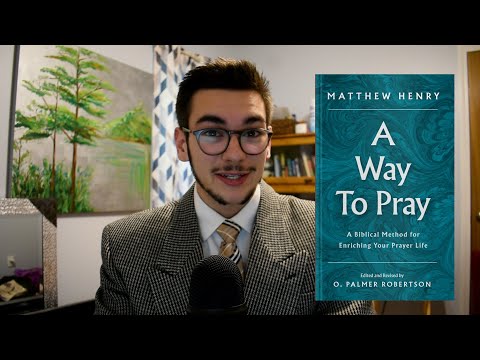
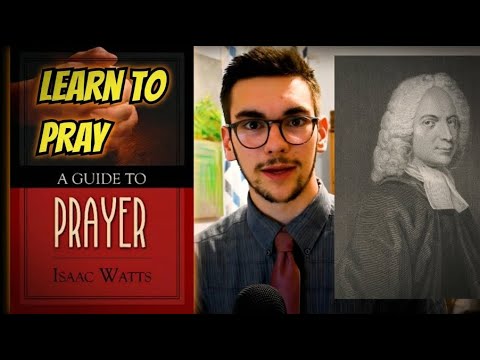
Ironically, before this series we did a series on prayer: Matthew Henry's A Way to Pray, Samuel Miller's Thoughts on Public Prayer and Isaac Watts's A Guide to Prayer. Henry and Watts were Puritans too, so I'm adding those to this series, and this book to the prayer series. I didn't plan it that way, but providentially it worked out.
Why prayer?
The Puritans were great in many ways, but one of their main focuses was prayer, not just in public, but in private: the kind where you go into your closet and shut the door, and no one hears but God, your Creator, Sustainer and Savior. They prayed so powerfully, and in many cases they wrote their prayers down. Arthur Bennett came along and compiled them.
The book and the editor
It's about 405 pages, with some 200 prayers, and comes in four editions: paperback, bonded leather, genuine leather and goatskin. Mine is the genuine leather, Smyth-sewn and printed in China, and still a great, well-made book. It comes with probably the best book box I've ever seen, really thick cardboard you can throw in your backpack. The genuine leather is probably the most practical, but any of the four editions is worth owning. It retails around $70, one of the more expensive books I've bought new, but it's worth the money.
Arthur Bennett was born on May 15, 1915, and died in 1994. He's buried in the churchyard at Little Munden, Hertfordshire, and his gravestone reads, fittingly, "Let me find thy joy in my valley." He left school at 13 to work in his father's barbershop as a lather boy, was saved in his teens, and knew at once that God was calling him to some kind of ministry. In 1940 he entered Clifton Theological College, was ordained in the Church of England two years later, and served as a minister for 39 years. He also taught biblical theology and Christian doctrine at All Nations Christian College for 17 years. Bennett compiled these prayers in, I believe, 1986.
What it's like
It's a devotional, theological, deep, biblical and practical book all in one. I like to pair it with my Bible study. Prayer is probably the hardest Christian thing to do, harder than Scripture reading for me, especially with all the distractions of our time. As Bunyan said, it's better to have a heart without words than words without a heart. When these words come from my heart, they become mine. This book has been a great help.
Bennett deliberately didn't mark who wrote each prayer, so that you focus on what it says rather than who said it. The sources include Richard Baxter, David Brainerd, John Bunyan, Philip Doddridge, Christmas Evans, William Jay, Henry Law, William Romaine, Thomas Shepard, Charles Spurgeon (not a Puritan, but heavily influenced by them), Augustus Toplady, Thomas Watson, Isaac Watts (including A Guide to Prayer) and William Williams.
The prayers are in ten sections: Father, Son and Holy Spirit; Redemption and Reconciliation; Penitence and Deprecation; Needs and Devotions; Approach to God; Gifts of Grace; Service and Ministry; Valediction; and A Week's Shared Prayers (which I know is by Toplady). I haven't quite figured out the logic of the sections; each prayer seems to stand on its own. Every prayer has been edited to fit in two pages or less, in a bigger typeface, so they're easy to read.
In his introduction, Bennett explains that these prayers come from the largely forgotten deposit of Puritan devotion, and he hopes to redress its neglect. He notes that Puritan influence continued at least to Spurgeon (1834–1892), "the last of the great Puritans," and that conformists and nonconformists, English and New England, spoke the same spiritual language and breathed out the same God-centered aspirations, so the prayers have a remarkable unity. I'd love to read more of it, but I don't want to get in trouble for reproducing copyrighted work!
It's so God-centered. Some theologians today make prayer about the individual, but as Whitefield said, prayer brings God down to man and man up to God. And since the Puritans were so strong on family worship, it's a great book for devotions with others too.
Are there better books on this topic?
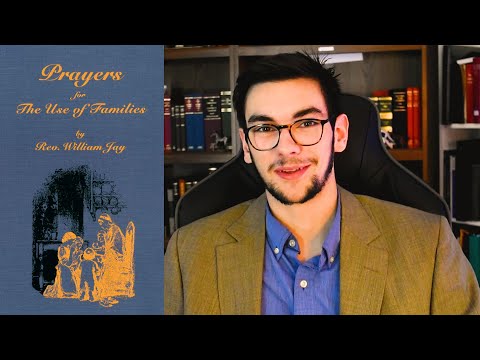
We've reviewed other prayer books: William Jay's Prayers for the Use of Families, Henry's A Way to Pray, Watts's A Guide to Prayer. This one is in a category of its own: two centuries of Puritan prayers, ready to pray. It's certainly one of the best, if not the best, on the topic.
Would I buy it?
Yes. Any of the four editions.
I'll close by pointing you to the one prayer in the book Bennett wrote himself, the title prayer, "The Valley of Vision." It's built on paradox: the way down is the way up, the broken heart is the healed heart, to bear the cross is to wear the crown, and "the valley is the place of vision." Read it for yourself. It's worth the price of the book.
Soli Deo Gloria!