Prayers for the Use of Families by William Jay Review
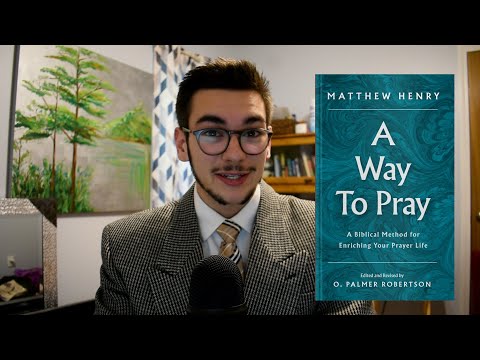
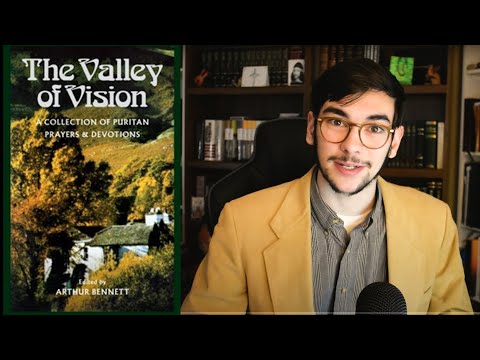
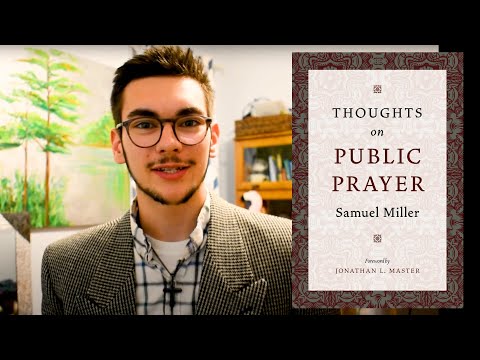
We've reviewed lots of books on prayer on the channel (The Valley of Vision, Thoughts on Public Prayer by Samuel Miller, A Guide to Prayer by Isaac Watts, A Way to Pray by Matthew Henry), and more recently we've been going through the works of William Jay. This book falls under both: Prayers for the Use of Families.
The book
It's technically two books in one: the prayers (235 pages), and a Jubilee Memorial of Jay's fifty years of ministry at Argyle Chapel (179 pages), 414 pages in all. It's bound like the other Sprinkle Publications volumes of Jay (I'm not sure if it's cloth), and Smyth-sewn.
Since this is the fourth Jay volume we've looked at, including his autobiography, I'll keep it short: he was born on May 6, 1769, and died on December 27, 1853. He left work with his father, a stonemason, in 1785 to pursue education and ministry, and married his wife Anne in 1791, with whom he had six children.
What I liked
- The prayers are extremely biblical, full of Scripture, very much like Henry's A Way to Pray. Many phrases are straight Scripture. The only difference is that Jay doesn't cite the references; you have to know where they come from. As Henry would say, we need to be praying the Scriptures.
- There's a lot of content. Six weeks of morning and evening prayers: 84 prayers, each a page and a half to two pages, in fairly small type.
- Fifty-two more prayers for particular occasions, on top of those 84.
- The Jubilee Memorial. I don't think it would otherwise be printed anywhere, since it doesn't fit with Sprinkle's other books. It's printed as a separate volume in the back with its own page numbers (and a larger font): the sermons, meetings, presentations and even the hymns sung that evening.
What I didn't like
- The prayers are long. I'm fairly sure it was Samuel Miller, in Thoughts on Public Prayer, who said Jay's prayers are too long and that children may find it hard to pay attention. (I went back to find the quote and couldn't, so I can't prove it was Miller.) I agree. I used this for about eight weeks in my personal devotions, reading one prayer during my prayer time, and I had trouble paying attention through the whole thing. A child with a shorter attention span would have even more trouble. Compare The Valley of Vision, with its short, beautiful prayers that a child could definitely follow.
- Morning and evening prayers can be discouraging. It's the same reason I don't like daily Bible reading plans. (I use Matthew Everhard's plan, a single sheet with a box for every chapter of the Bible that you mark off as you go, and that's much healthier for me.) I'll be honest: my evening devotions are basically nonexistent. I'd wake up and realize I'd missed the evening prayer, get days behind, try to catch up, and it was extremely discouraging. With a busy family, someone sick, someone gone, I think it's better to read them as 84 individual prayers.
- The text is small for family devotions. Fine for private reading, but hard to read aloud to a group. The Valley of Vision has a large, easy-to-read font. A nitty-gritty point, and larger type would make the book a lot bigger, but I think it matters.
So this is a perfect book for personal devotion, or for inspiration for family prayer. I found myself, when praying without a text, quoting Jay and praying his words as my own, just as I did after reading Henry and Watts. You could do the same with your family: shorter, more concise, and more personal.
What's in it
Part 1, prayers for morning and evening for six weeks; Part 2, prayers for select occasions; Part 3, short devotions for occasional use: petitions for particular occasions, pious addresses for particular seasons, and thanksgivings for particular events; and an appendix with more prayers, including prayers before and after meals. Then the Jubilee Memorial: Jay's sermon, a sermon by Timothy East of Birmingham, the morning meeting with its presentations and speeches, the evening meeting at Argyle Chapel, a juvenile presentation, and the anthem and jubilee hymns, including one by James Montgomery.
Would I buy it?
Yes, especially since it's from Sprinkle Publications, which is out of business, so these are hard to find. If you find any William Jay anywhere, I highly recommend you buy it.
A few prayers I marked
More than once, a prayer addressed exactly what I was dealing with that day. This was one of them (Week 1, Saturday morning, p. 25):
In all the events that would alarm or perplex us, may our minds be stayed upon God... May we remember that trials from Thy hand are blessings in disguise, and that when they come to be unveiled... they will draw forth our gratitude and praise. Till we can walk by sight, enable us to walk by faith.
From Week 2, Tuesday evening (p. 39): "We live not in a fatherless world... May our character, therefore, and not our condition, be the object of our anxiety." That's important.
Week 2, Wednesday morning (p. 41): whatever the opinion of our fellow creatures, may we be satisfied and happy in having the testimony that we please God. Amen to that.
Week 5, Tuesday morning (p. 120): teach us to love our neighbor as ourselves, and to examine our talents and opportunities to see how we may be serviceable in our day and generation. Written so long ago, yet so practical today.
And Week 6, Monday morning (p. 146): "Be the friend of our friends, the father of our children, the master of our servants... Let the young be sober-minded, and flee youthful lusts; let the hoary head be a crown of glory... We pray for the afflicted; and we pray still more for the prosperous and indulged."
From Jay's Jubilee sermon (p. 25), on popularity: it's always dangerous, and perhaps no popularity is so exciting as that which comes from great usefulness. If Luther or Whitefield or Wesley could have seen all they would accomplish, they might have been exalted above measure. But hereafter we'll see that we were only instruments. You are God's instrument; your usefulness is not of your own doing.
And Jay closes by quoting Mr. Hervey's summary of the gospel in three R's: ruin by Adam, redemption by Christ, and regeneration by the Spirit. Those are the principles Jay preached all through his sixty years at Argyle Chapel.
Soli Deo Gloria!