How to Build a Theological Library for $200
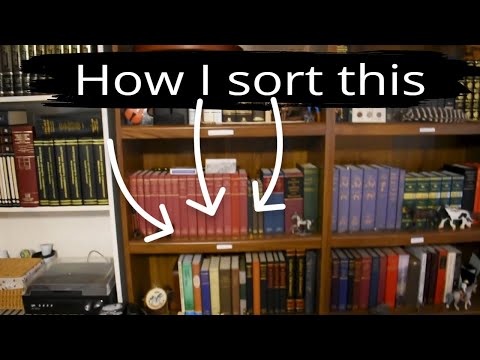
So you're new to theology and you're looking for books and references you can turn to at a moment's notice. But where do you begin? What should you buy, where do you get it, and how much does it cost? In this first part of How to Maintain a Library, I try to answer those questions and keep the price around $200.
Matthew Everhard did a similar video, but he mostly answered the question for people in authority at a church: elders, deacons, teachers. This is for the lay person, anyone in the church who wants to know more about theology.
I'm no expert. These are simply books I've used very regularly in my own study. For most of them I give a higher-end and a lower-end option. All the low-end picks come to about $198, and all the high-end picks about $294, so you can pick and choose somewhere in between.
1. A Bible
I'll assume you have one, but I want to recommend a specific kind: a single-column, wide-margin ESV. It's been such a blessing to my study. I can write notes and put little symbols in the inner margin, and the text is very readable, for devotional reading and for deep study. There are lots of styles of Bibles, and you can choose what's best for you; this is what's best for me. A faux-leather one runs about $25.
2. A commentary
There are two ways to go. The ESV Study Bible is a single-volume commentary, with notes, cross-references, book introductions and all sorts of resources in the back, and you can get a hardcover for about $25. Or for something more in-depth and historical, Matthew Henry's Commentary on the Whole Bible, a six-volume set for around $70. It's very in-depth but readable, and you can sometimes find it at Goodwill or other thrift stores. It's a standard commentary everyone should own at some point.
3. A dictionary and a thesaurus
Both an English dictionary and a Bible or theological dictionary. As you study theology you'll quickly run into words you don't understand, especially in older English. Mine is a Collier's dictionary I found at a thrift store; I think I got it and a thesaurus for about four dollars. A thesaurus helps immensely when you're writing. I budgeted $40 here to be liberal, but there's no reason to spend a lot.
4. A systematic theology
This is where you go for the theology of any subject, from creation to the end times: church government, discipline, the sacraments, the person of Christ, everything. Two single-volume options: Louis Berkhof's Systematic Theology (about $34), or Calvin's Institutes of the Christian Religion, 1541 edition (about $36). Single volumes are cheaper and more accessible, and you absolutely need one.
5. A confession of faith
Maybe you're Baptist and it's the 1689 London Baptist Confession; maybe you're Presbyterian and it's the Westminster Confession. A confession keeps you from wavering into heresy or weird doctrine and keeps you focused on orthodox, historical theology. A paperback is usually less than $6, which is all you'd ever need.
6. A hymnal
Singing is a huge part of the Christian faith, even if you aren't good at it. Hymns are poetic and biblical. I recommend the Trinity Psalter Hymnal. It includes all 150 Psalms set to music, plus the regular hymns, so you can sing devotionally and study them theologically. It also has the catechisms and the Westminster Confession in the back, which could save you money.
7. A set of sermons
Sermons from the past are thorough, cover a wide variety of passages and doctrines, and are very applicable to life. Spurgeon's sermons from Hendrickson come in a five-book set for about $70 (or about $65 if you buy them one at a time, which also lets you spread out the cost). Or there's William Gurnall's The Christian in Complete Armour, wonderful biblical preaching on Ephesians 6, maybe 1,200 pages, for $43 (or $28 in paperback). I'd lean toward Spurgeon for the variety; Gurnall focuses mostly on spiritual warfare and one passage, though he's extremely in-depth and helpful.
8. A biography
Anyone who has studied theology will tell you there's a point where you get puffed up with knowledge and think you're brilliant. Reading biographies reminds you that you're not that great, and that you really don't know that much. That's certainly been the case for me. Two recommendations: Foxe's Book of Martyrs (about $15), and J. C. Ryle's Light from Old Times (about $22), with thirteen biographical sketches, each in-depth and helpful to your soul.
If you want to keep going, the next part of the series is about organizing your library.
Soli Deo Gloria!