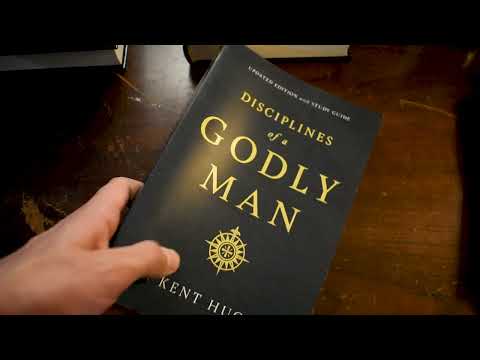
What's the Quality of Banner of Truth Books?
Someone recently asked about the quality of Banner of Truth's J. C. Ryle volumes: the dust covers, the binding, the look. So I want to answer that more broadly: what's the quality of Banner of Truth books in general? I'm using Ryle's Holiness as my Ryle example, along with several others.
Dust covers
Banner's dust covers are a glossy paper on the outside and plain paper inside. Compared with, say, Eric Metaxas's Martin Luther from Viking (which has nice raised lettering), I think Banner's glossy covers are more durable and will last longer.
My only complaint applies to the Ryle volumes especially. The gold titling on the dust cover rubs right off where your hand holds the book. You can see it on my copy of Old Paths. So it's lose-lose: destroy the dust cover by taking it off to read, or rub off the title while you read. I decided to keep the dust covers on and just let the gold rub off.
How long do the dust covers last? My first volume of Arnold Dallimore's George Whitefield is a 1971 second printing. The only real wear is that it's faded from the sun and yellowed a little inside. The corners look okay and the binding is still together. It's basically like new, 50 years later. I don't think Banner has really changed how they make books. The only thing they've dropped is gilding the top edge of the pages, which is kind of sad.
Cloth bindings
Banner offers different colors: red, blue, an orangey shade, gray, black, and various shades of each. As far as I can tell they're basically the same material, though some feel more like cloth than others; Princeton versus the New Divinity feels more clothlike than the Spurgeon volume, and you can really feel the weave. A Way to Pray is the only Banner book I have with a ribbon. My older volumes from 1993 and 2001 (like the Letters of Henry Venn) feel a little different from the newer ones, so maybe they switched materials somewhere between eras.
How do they hold up? The book I've been hardest on is my Institutes. I've traveled all over the country with it and dropped it. All that happened was a small snag where it hit, and a little ripple where I must have jabbed it with a pen. The Christian in Complete Armour has the same kind of mark. That's just a side effect of using your books. Because it's cloth and not paper, it bends a little instead of ripping. A regular paper-covered hardback, like a Hendrickson Spurgeon, would just tear.
The cover art
Banner's covers have beautiful type. Some have just a border with the title, author and "Banner of Truth" at the bottom. Some have the logo, some say "Banner of Truth Trust" (my John Owen volumes do; I'm pretty sure that's the original London imprint, before they moved to America). Others are more artistic, colored black, with a border, or with a border all the way around, like Spurgeon's Autobiography. Those are my favorite.
Sewn vs. glued
All of these are Smyth-sewn, well made and built to last. That's why they cost a little more. Compare the Martin Luther biography, a semi-cloth hardback: it's wearing at the edges, and it isn't sewn, so at some point the pages are, pun intended, bound to fall out. On the Banner book you can see each folded group of pages (the signatures) sewn tight to the binding. I try to bend it and it won't budge. The other has a lot more movement.
The content of a book can be excellent, but if you want something to give your children or to use as a reference the rest of your life, these Banner volumes are built for that. Banner does publish a few paperbacks, but they're understood not to be on the same level. You buy the clothbound hardcovers to have something that lasts. (For more on telling them apart, see How to Tell Sewn from Glued Bindings.)
Leather
New to their lineup: a genuine leather volume. It's also Smyth-sewn, but printed in China instead of America, so a little lower quality there. The pages are very thin (it's meant to be devotional), with gold gilding, a thick pastedown, and raised hubs on the spine. I love those, and wish clothbound books could have them too. It should also last a lifetime.
Buy books that last
I encourage anyone buying books to buy ones that will last. The point of having books is that they can't be taken from you the way things can be taken off the internet. Buy books you can give your children and grandchildren. You won't regret it. That 50-year-old Whitefield volume probably has another hundred years in it if it's cared for. These will all be around long after I'm dead.
Soli Deo Gloria!