From Reading to Review: My 10 Step Process for Reviewing Books
I thought it could be fun to walk through how I go from reading a book to reviewing it. Before I wrote these notes, I didn't have a formal process. It was just in my head, and it's changed over the years. If you like this, maybe I'll do it again in five years to see how it's changed! But for now, this is what I do for every book I review each week.
I'll use a book we reviewed recently as the example: Contentment, Prosperity, and God's Glory by Jeremiah Burroughs.
1. Select the book
Usually it's the next book in the series we're working through. Every couple of months we start a new series. Right now it's Why You Should Read the Puritans, showcasing books that demonstrate the value of the Puritans for the modern reader. So I pick the next one off the stack.
2. Start reading
I always try to read the introduction first. It gives an excellent overview of what you'll be reading, especially if the title isn't clear. And reading consistently is key. I'll admit this is something I struggle with. I try to film reviews on Tuesdays, and I've done a lot of Monday cramming! I have a video on how to read more consistently and map out a book.
3. Remember what I read
This is also difficult, and I have a video on it too. Three things help me:
- Reflect and contemplate. Our mission is to invite the church to read, reflect and contemplate. I'll read a chapter or two and try to draw connections to other books I've read and reviewed. That helps with understanding and remembering.
- Live it out. Without living out what you read, that knowledge isn't truly gained. A book like Contentment, Prosperity, and God's Glory is very practical: whether you're poor, be content; whether you're prosperous, glorify God. Either way, you give glory to God.
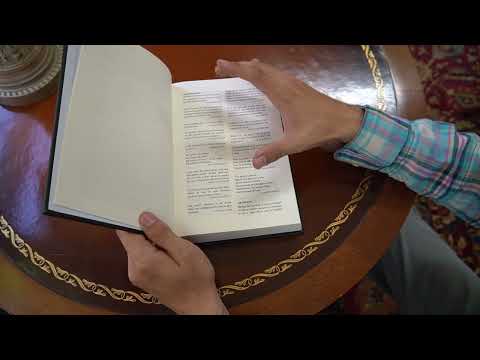
- Take a lot of notes. Recently I've started writing notes on the blank page at the front of the book. Otherwise you basically have to read the book two or three times to get your points out. (I have a video on how to take notes while reading, too.)
4. Review my notes
I bracket passages as I read; that's where my quotes come from and where I build the points for the review. Then I go back through the bracketed sections and add them to each point as support, with page numbers.
5. Write a short biography
One of my favorite parts. I'll find resources on the author, or read a biography, and summarize it in a few sentences. For the Puritans series I'm using Joel Beeke's Meet the Puritans, an excellent resource. Knowing who the author was and the context he wrote in gives new life to the book you've just read.
6. Fill in my review template
I transfer the notes from the book into my review template, put them in order, and add the quotes.
7. Pick my favorite quotes
I go back through the book for quotes that didn't make it into my points. I put exclamation marks next to the ones I think will be really good. For example, on page six Burroughs says that a godly heart is willing to lie under the feet of anyone for the sake of good.
8. Prepare and film
The introduction is my biggest challenge, and not my strong suit. I usually spend several minutes, with the camera running, trying to come up with one. Then I run through the whole review to prepare my mind, and check all the equipment.
9. Edit
These days I don't make many cuts. Back when I wasn't as prepared, I had to cut a lot. Now it's mostly color grading, fades in and out, and making sure the audio sounds okay. Then I export.
10. Upload
To YouTube, to the website, and sometimes the audio to the podcast platforms.
There you have it: from reading to review. I hope it was interesting to you!
Soli Deo Gloria!