Bishop J. C. Ryle's Autobiography Review
It had been almost two years since I last read J. C. Ryle's autobiography, but a few months ago someone asked me to review it, so this week I reread it. I was so pleased that I did, and I'll probably read it a third time.
The book
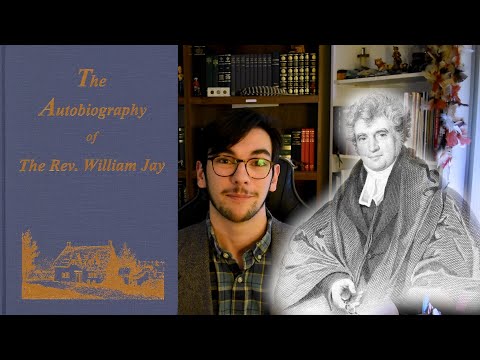
The autobiography itself is 154 pages; the whole book is 359 with the acknowledgments, introduction, appendices and index. It's clothbound and printed in the USA by Versa Press, like all Banner of Truth books. Take off the dust cover and the book itself is absolutely breathtaking: a blue salt-and-pepper cloth with beautiful gold lettering. The endpapers are unique too. I've never seen anything like them in a Banner book: images of churches and houses where Ryle spoke and lived, or where his friends lived. A beautiful book just to hold and enjoy.
About Ryle
Since I've reviewed the bulk of Ryle's works and talked about him a lot, I won't repeat myself here. We have a timeline of the biggest events in his life and a page of quotes from his works on the site. (I realized while rereading this that some of the timeline dates may be slightly off, give or take a few days or years, but for the most part they're correct.)
Briefly: Ryle was an Anglican and an evangelical, the most evangelical pastor of his time in my opinion, and a contemporary of Spurgeon. He had a light stroke in 1891 but recovered and kept working until February 1900, and he died slightly past his 84th birthday. As you'll discover in this book, he had a very rough time. He struggled through the deaths of two wives before marrying his third, some of his children were stillborn, and when his father, a banker, lost everything, he had to change his entire life plan.
What's in it
Ryle's autobiography proper: family background, childhood, early education, Eton College, Oxford, conversion, Henbury Hall, bankruptcy, Exbury, Winchester and Helmingham. Then the appendices: the Ryle family Bible, the Eton Society, Herbert Ryle on his father's school days, Canon Christopher on Ryle's conversion, Ryle's earliest tracts, Ryle's funeral tribute to Georgina Tollemache, and Ryle's last will and testament.
Ryle wrote this from his own memory for his children; it was never meant for publication. So some of his dates are a little off (Andrew Atherstone shows us in the footnotes), and there are amusing grammatical slips, sentence fragments and run-ons. I assume it's the way he talked. He expects you to hear his voice, not just read the words. The original manuscript had no chapters; Atherstone added them, which made it much more readable.
What makes it stand out
- A substantial index, including every name mentioned. My last name is Moore, and there are multiple Moores in this book. At some point I'd like to see whether there's a connection!
- Helpful background in the introduction. Atherstone explains where the manuscript came from, why it wasn't published until now, and the story of Peter Toon and others who worked on a Ryle project that never came out.
- Extremely helpful footnotes, sometimes taking up half the page, and over 370 in one section alone, correcting Ryle's mistakes and telling you about the people he mentions.
- The appendices, which make up half the book. The best is Ryle's earliest tracts: a massive number of tracts, mostly published under the title Home Truths, eight volumes that came before his other works and are otherwise completely unavailable. I've managed to get my hands on two of the eight. That alone would be a reason for me to buy this book. His will is fascinating too. He left thousands of books to his children and grandchildren, and around 4,000 to a church house that was being built. All of those were lost in the World War, unfortunately, but it's still inspiring to me as I try to grow a library.
- So many pictures. The Ryle family finally released them to Atherstone, so these aren't in Murray's biography or any of the others. Ryle with his dog, Ryle with his cat, his family, his hometown, the churches he preached in. One of my favorite parts: his wife Henrietta was really into photography, and there's a whole series of them posing as characters from The Pilgrim's Progress.
- The detail. You'll know so much about Ryle and his early life.
Are there better books on this topic?
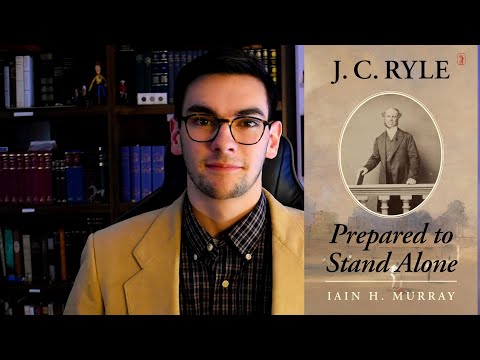
This is the best biography of Ryle out there, with one caveat: it doesn't cover his later years. For those you'll need a different biography, like Iain Murray's, which is also fantastic. But if you want to know where Ryle came from and how he became the Ryle we know from his works, this is the book to go to. It's also the best resource for academic study of Ryle. A lot of the detail is probably more than the common reader needs, and the footnotes are a little strenuous at times, but for understanding Ryle it's very, very helpful.
Would I buy it?
Yes. It's a great biography, especially helpful for understanding Ryle's background, and funny at times. He shares some hilarious stories.
I'll close with two quotes from the tracts in the back. From page 286: "Activity in doing good is one receipt for being cheerful Christians. It is like exercise to the body: it keeps the soul in health."
And from a tract he wrote to his church on New Year's Day (p. 244), which I almost want to frame and hang on my wall:
Do not love this passing-away world better than eternal life. Here, at the beginning of a new year, dare to be bold and decided. Come out of Egypt. Repent, believe, and be saved. Oh, taste and see that the Lord is good! Blessed are all they that trust in Him!
Soli Deo Gloria!